
The Ultimate Pressure‑Washing Guide 2026: Pricing, Hiring, and How AI Is Fixing a Broken Market
Your one‑stop resource for homeowners who want a crystal‑clear quote, a safe escrow payment, and a hassle‑free booking experience – plus the insider secrets…
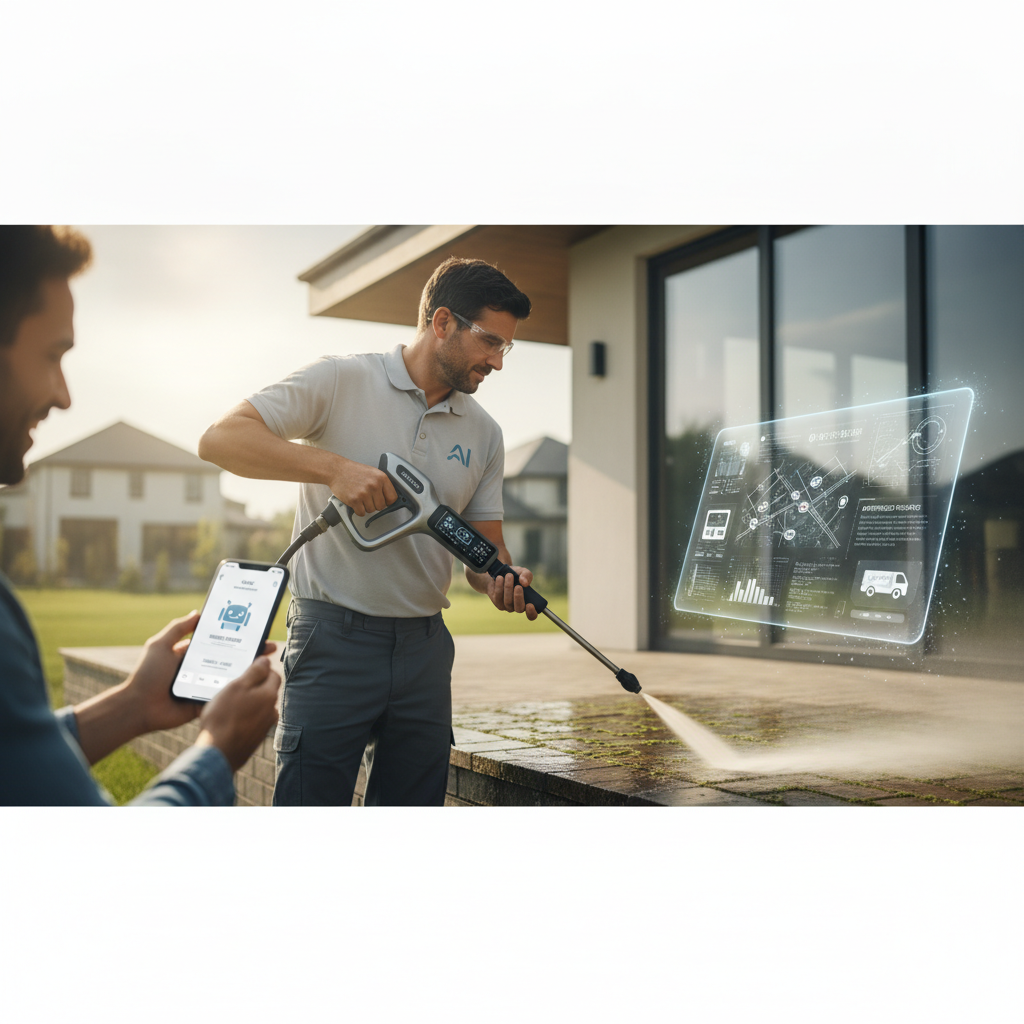
Your one‑stop resource for homeowners who want a crystal‑clear quote, a safe escrow payment, and a hassle‑free booking experience – plus the insider secrets pros need to ditch lead‑fees and boost margins.
Introduction
You’ve probably spent an hour on the phone, snapped a few photos of your driveway, and still got a vague “$200‑ish” estimate from a local pressure‑washer. That endless phone tag, the surprise‑price “scope drift,” and the fear of paying for work that never shows up are the #1 complaints in the home‑services market today.
A recent Home Service Customer Service Report found that homeowners forgive delays, but they hate vague scopes and unanswered calls — and 62 % of inbound calls go unanswered (SchedulingKit).
On the provider side, contractors are fed up with $50‑$150 per‑lead fees from platforms like Angi and Thumbtack, many of which deliver dead leads that never convert. The Better Business Bureau even warned contractors to avoid firms that charge a $99 “advance fee” for leads (Construction Dive).
The result? A $1.2 B U.S. pressure‑washing market where 58 % of new operators fail within two years—not because demand is lacking, but because the workflow is broken.
Enter PLMBR, the AI‑native home‑services workflow and payments platform that eliminates phone‑tag, replaces vague estimates with structured booking packets, holds money in escrow until work is verified, and never charges a lead fee. Below is a step‑by‑step guide that shows you exactly what to expect, how to avoid costly pitfalls, and why PLMBR is the game‑changer both homeowners and pros have been waiting for.
What Homeowners Need To Know About Pressure Washing
Pressure washing isn’t just about blasting away grime; it’s a service that involves safety, water‑runoff compliance, and precise pricing. Knowing the basics helps you ask the right questions and compare quotes on a level field.
| Aspect | Typical Details |
|---|---|
| Common Jobs | Driveway cleaning, deck & patio resurfacing, siding, fence, garage floor, commercial storefronts |
| Average Residential Ticket | $350 – $600 (driveway, deck, siding) – MakeWash |
| Average Commercial Ticket | ≈ $1,200 per job |
| Pricing Basis | Square‑foot pricing ($0.08‑$0.40 / sq ft) or flat‑rate per job; includes labor, water‑recovery, equipment wear |
| Seasonality | Peak demand in spring & summer; off‑season cash‑flow gaps can be as high as 23 % no‑show rate (SchedulingKit) |
| Regulatory Touchpoints | EPA storm‑water runoff rules; most states require a disposal plan or on‑site capture for > 200 gal per job (EPA) |
Scroll to see all columns →
Key takeaway: A transparent quote should break down labor, equipment, water‑runoff mitigation, and any permits. Anything less is a red flag.
Cost / Risk / Hiring Reality
Understanding the true cost of hiring a pressure‑washing professional helps you avoid surprise bills and hidden fees.
| Cost Item | Typical Range | What It Covers |
|---|---|---|
| Base Labor | $25‑$45 / hr | Technician time, travel, set‑up |
| Equipment Depreciation | $0.02‑$0.05 / sq ft | Wear on pumps, nozzles, hoses |
| Water‑Runoff Management | $0.01‑$0.03 / sq ft | Capture tanks, disposal fees (EPA‑compliant) |
| Insurance / Licenses | $50‑$150 / job | Liability, workers comp, state licenses |
| Profit Margin (Industry Avg.) | 5.6 % – 8.4 % (IBISWorld via The AI Trades) | Net profit after all expenses |
| Top‑Performing Operator Margin | 20 % – 30 % | Streamlined workflow, no lead fees, progressive billing |
| Customer Acquisition Cost (CAC) | $85‑$180 (residential) | Traditional lead‑gen platforms |
| Typical Lead‑Fee (Angi/Thumbtack) | $50‑$150 per qualified lead | Often paid for dead leads |
| Escrow / Payment Hold | 0 % fee (Stripe standard) | Funds released only after job verification (PLMBR) |
Scroll to see all columns →
Risk factors to watch:
- Dead leads – you may pay for a quote that never turns into a job.
- Scope creep – vague estimates lead to surprise add‑ons.
- Cash‑flow gaps – contractors may request full upfront payment, leaving you exposed if work isn’t completed.
How To Vet Providers Without Getting Burned
A smart vetting process saves you time, money, and headaches. Follow this checklist:
- Check Licensing & Insurance – Verify state contractor license and liability insurance. PLMBR stores these documents digitally and flags expirations.
- Look for EPA‑Compliant Runoff Plans – Ask how they handle water disposal; reputable pros will have a documented plan.
- Read Verified Reviews – Focus on reviews that mention scope clarity and payment handling. Platforms with “trust scores” (like PLMBR) aggregate sentiment automatically.
- Demand a Structured Booking Packet – A line‑item quote that includes labor, equipment, water‑runoff mitigation, and payment schedule.
- Confirm Escrow or Milestone Billing – Never pay the full amount upfront unless the contractor offers an escrow‑backed guarantee.
Pro‑Tip: If a provider insists on a “flat price” without breaking down the scope, ask for a Booking Packet. The absence of one is often a sign of hidden costs.
Where The Old Workflow Breaks
Even with the checklist above, traditional lead‑gen platforms and manual processes still create friction. Here’s a step‑by‑step look at the broken workflow most homeowners endure:
| Step | Traditional Pain Point | Real‑World Example |
|---|---|---|
| 1. Intake | Homeowner describes issue via phone or a short form; providers must guess trade, urgency, and location. | “I need my driveway cleaned” – no photos, no urgency indicator. |
| 2. Matching | Platforms use keyword matching; often surface unqualified providers. | A landscaping company appears in a pressure‑washing search. |
| 3. Quote Request | Homeowner emails or calls multiple pros, leading to phone tag. | 3‑hour back‑and‑forth just to schedule a site visit. |
| 4. Quote Delivery | Vague “$200‑ish” estimate, no line‑items, no terms. | Provider says “around $250” then adds $75 for “extra work”. |
| 5. Scheduling | Manual calendar sync; missed appointments are common (23 % no‑show). | Technician arrives late, homeowner has to reschedule. |
| 6. Payment | Upfront cash or credit card; no escrow. Risk of paying for incomplete work. | Homeowner pays $300, later discovers only half the driveway was cleaned. |
| 7. Dispute | Phone calls, emails, and sometimes small‑claims court. Time‑consuming. | “We never agreed to pressure‑wash the fence!” |
Scroll to see all columns →
These gaps drive the 58 % failure rate among new pressure‑washing businesses and fuel homeowner frustration.
How PLMBR Changes This Workflow
PLMBR rewrites every step with AI and escrow‑backed automation. Below is a side‑by‑side comparison of the old vs. PLMBR‑enabled process.
| PLMBR Phase | What Happens | homeowner benefit | provider benefit |
|---|---|---|---|
| Conversational AI Intake | Describe the issue in plain English, attach photos. AI auto‑detects trade, urgency, and location. | No guesswork; instant, accurate match. | Only qualified jobs appear in your inbox. |
| Semantic Search & Matching | Vector‑based embeddings match you to the top‑fit providers by rating, distance, and availability. | Faster results, no irrelevant bids. | Higher conversion rate (qualified leads only). |
| AI Seeker Agent (Premium) | One click – AI contacts multiple providers, tracks replies, and surfaces any clarifying questions. | No more phone tag; you get a status dashboard. | Saves time on outreach; you focus on the job. |
| Booking Packet Builder | AI drafts a line‑item quote (labor, equipment, runoff mitigation, terms) that you can compare side‑by‑side. | Transparent pricing, no surprise add‑ons. | Faster quote acceptance, higher perceived professionalism. |
| In‑Context Messaging | Chat thread includes the packet, billing requests, and dispute forms inline. | All communication in one place. | Reduces admin overhead, improves response times. |
| Escrow‑Backed Payments (Stripe Connect) | Funds are authorized, held, and released only after you confirm completion. | Money is safe until the job is done. | Cash‑flow certainty; no need to chase payment. |
| Progressive Billing | Milestone‑based invoices (e.g., “50 % after prep, 50 % after finish”). | Pay as work progresses – lower risk. | Improves cash flow on larger jobs. |
| AI‑Mediated Dispute Resolution | Evidence packs and automated recommendations streamline any disagreement. | Faster resolution, less hassle. | Lower dispute costs, protects reputation. |
| Compliance Hub | Upload insurance, licenses, and runoff‑plan docs; PLMBR tracks expiration and flags gaps. | Peace of mind that the pro is compliant. | No more paperwork lost in email threads. |
Scroll to see all columns →
Result: Homeowners get clear, comparable quotes, escrow‑secured payments, and no phone tag; providers enjoy zero lead fees, qualified job pipelines, and automated compliance.
Real‑World Example: A Boston homeowner used PLMBR’s premium seeker agent and received three structured booking packets within 30 minutes. The chosen provider completed the job, and the escrow released the payment automatically—no follow‑up calls required.
Questions To Ask Before Hiring
Even with PLMBR’s safeguards, a quick pre‑call checklist ensures you’re fully covered.
- What’s included in the line‑item quote? – Look for labor, equipment, water‑runoff mitigation, and any permits.
- How is payment handled? – Confirm escrow or progressive billing; avoid full upfront cash.
- Do you have current EPA‑compliant runoff documentation? – Ask to see the digital compliance file (PLMBR stores this for you).
- What’s the expected timeline? – Ask for a start‑to‑finish schedule; PLMBR’s calendar sync will reflect it.
- Do you provide a written warranty? – A 30‑day service guarantee is common; ensure it’s in the booking packet.
- How do you handle changes or additional work? – Any scope change should generate a new packet for approval, not a surprise invoice.
If a provider hesitates on any of these, consider moving on.
Conclusion
Pressure washing should be a simple, transparent, and risk‑free experience—whether you’re reviving a cracked driveway in Boston or polishing a storefront in Philadelphia. Yet the market is still clogged with lead‑fee traps, vague estimates, and endless phone tag.
By leveraging AI‑driven intake, semantic matching, structured booking packets, and escrow‑backed payments, PLMBR eliminates the broken steps that cause 58 % of new operators to fail and leaves homeowners with the clarity they demand.
Ready for a quote that’s transparent, backed by escrow, and delivered by AI?
- Visit the PLMBR homepage to see how the platform works.
- Find Pressure‑Washing pros on PLMBR for your city (Boston, New York, Philadelphia, and more).
- Compare quotes on PLMBR side‑by‑side in seconds.
Take the guesswork out of pressure washing—let AI handle the admin while you enjoy a spotless home.
References
- EPA – Storm‑water runoff regulations.
- Better Business Bureau